

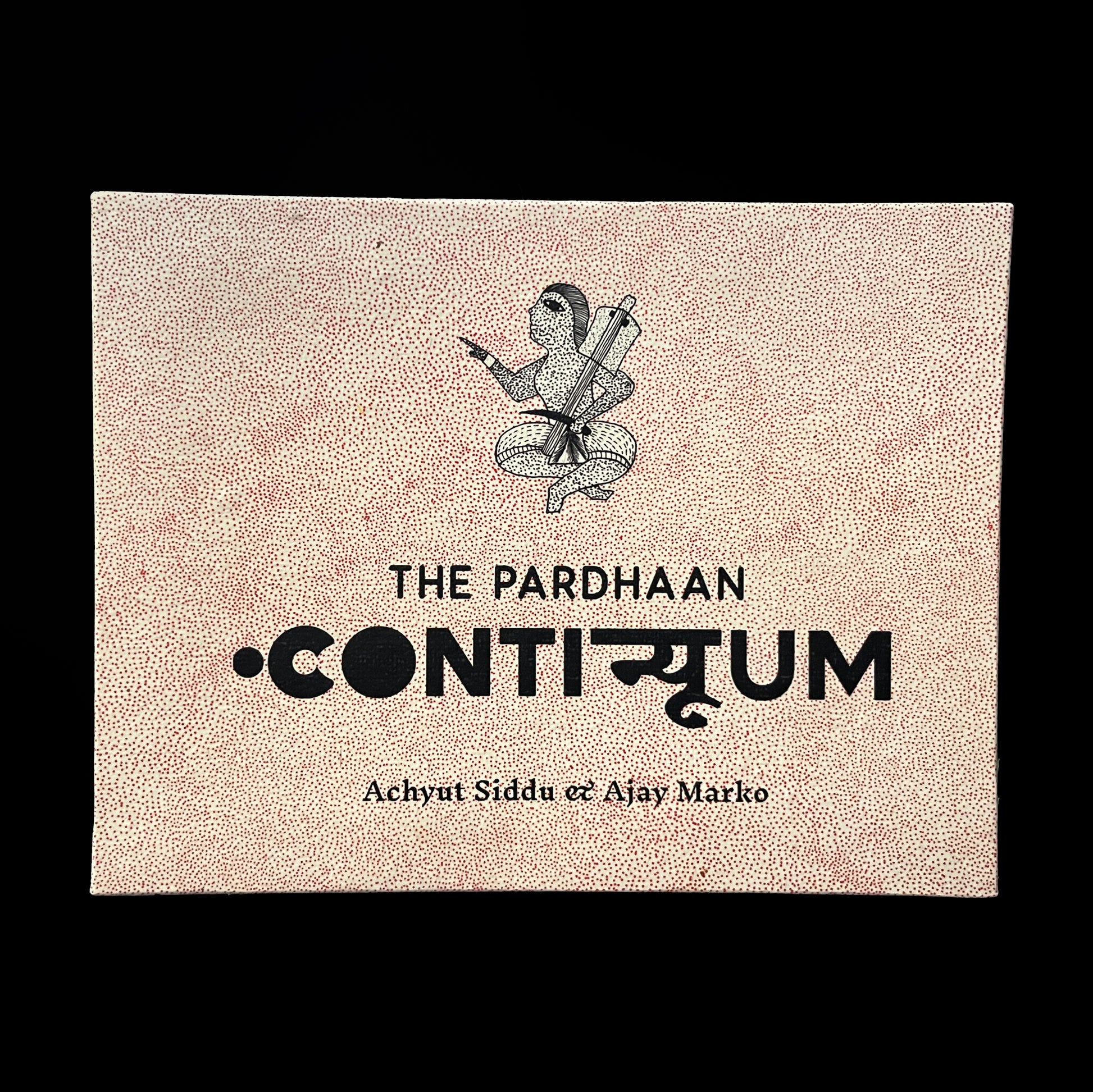
The Pardhaan Continuum
Achyut Siddu & Ajay Marko
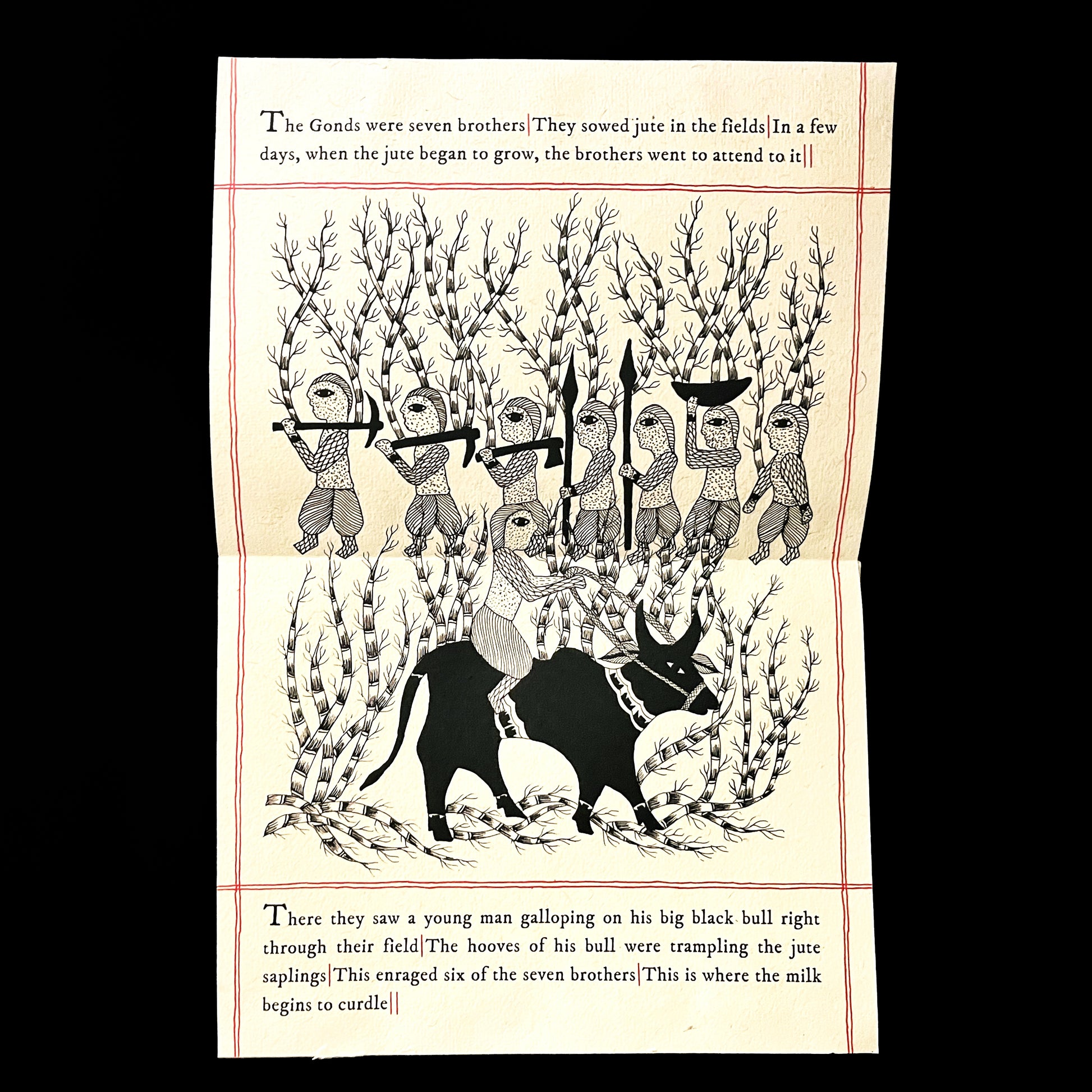
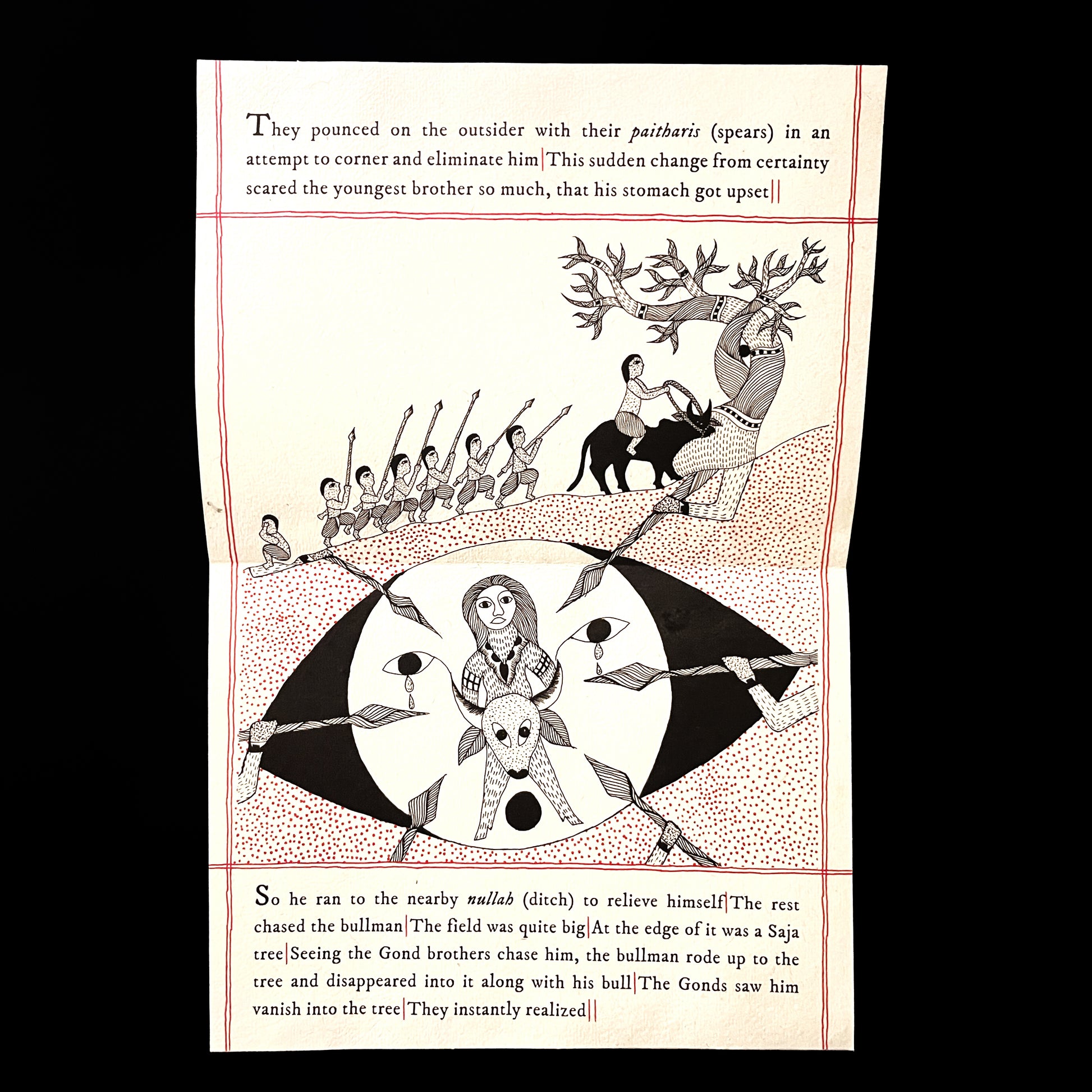
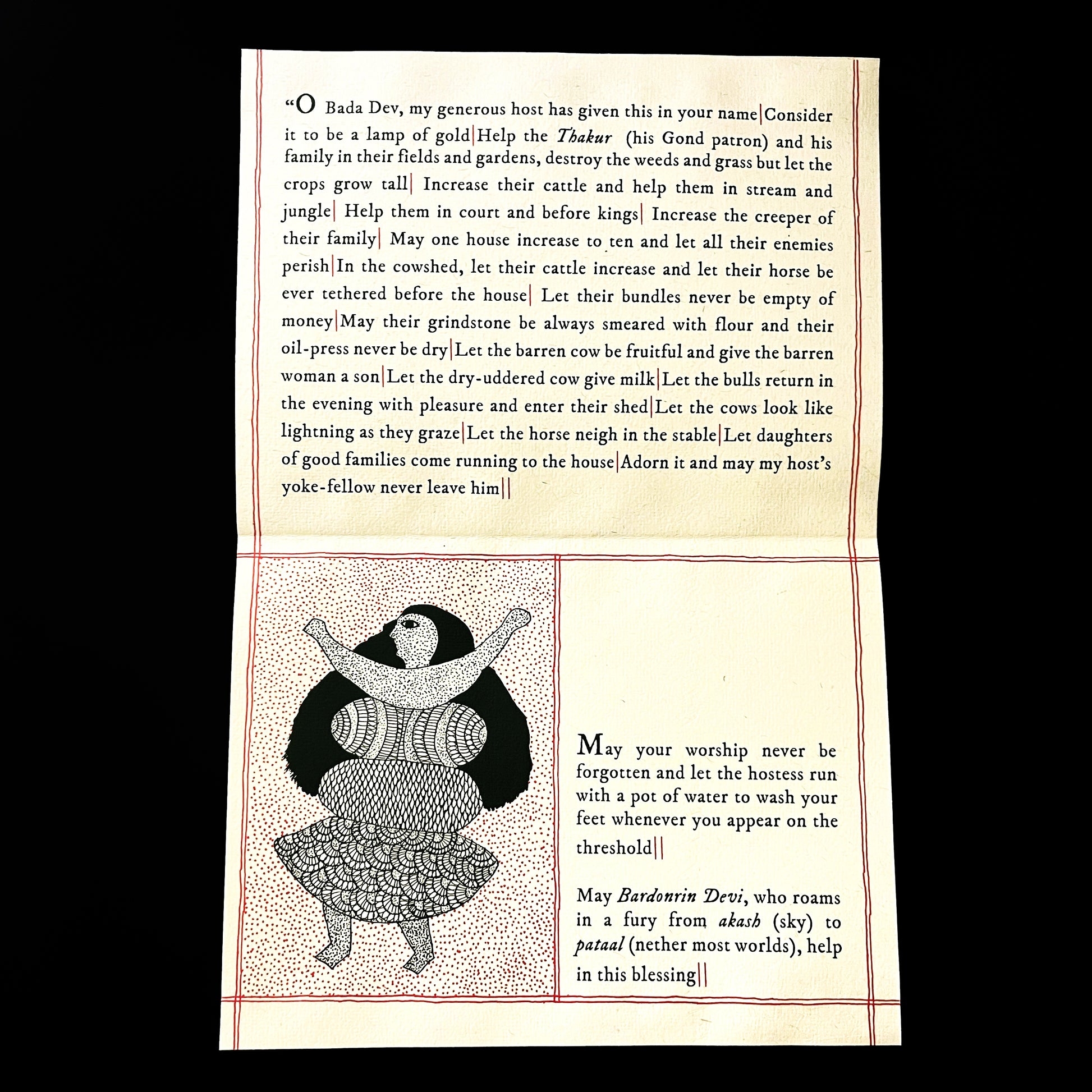
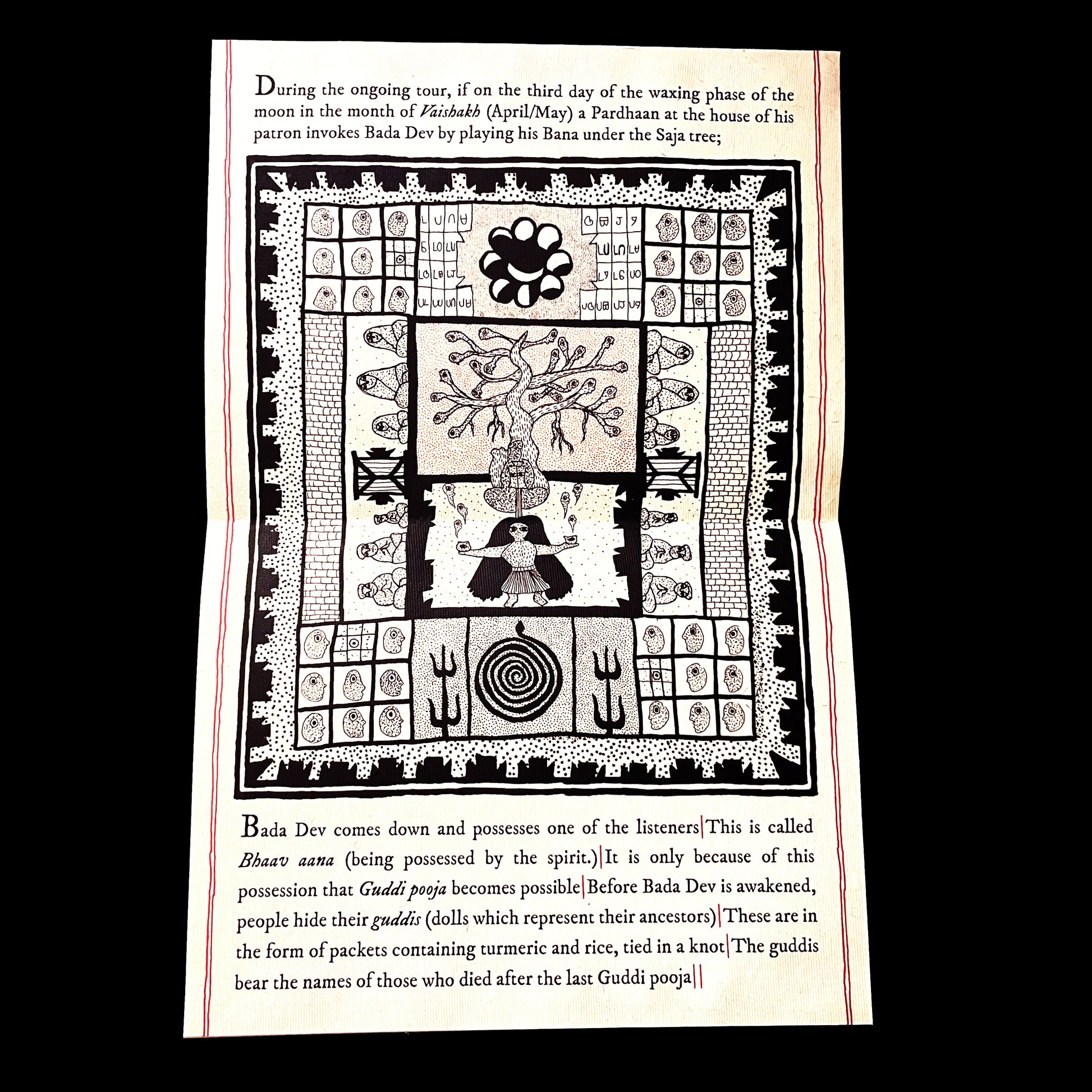
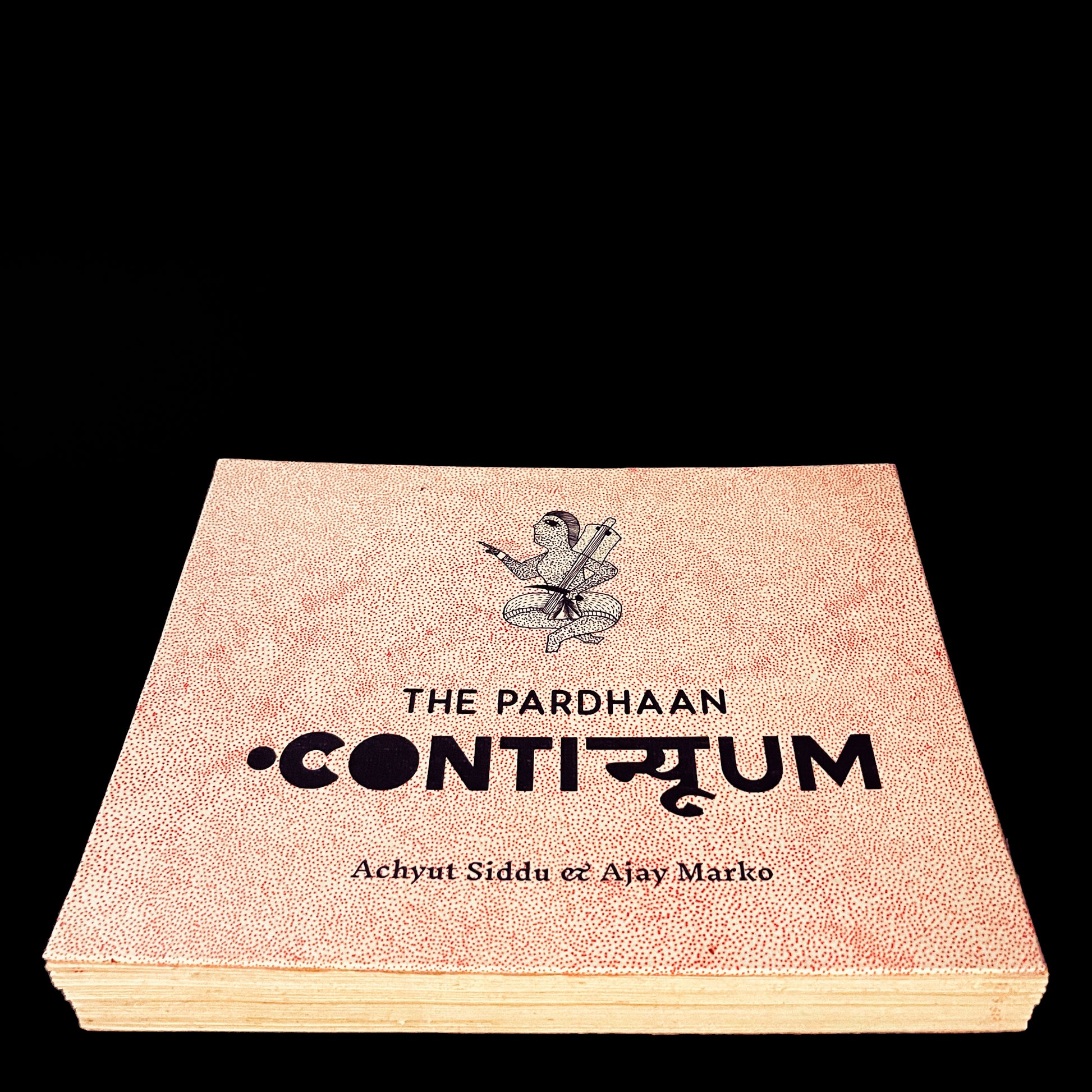
The Pardhaan Continuum is an expansive accordion-style book that unfolds to a length of 7.5 meters. Written and designed by Achyut Siddu and illustrated by Pardhaan Gond artist Ajay Marko, the book traces the origin myth of the Pardhaan lineage, their rituals, deities, and evolving roles in society. Combining immersive storytelling with traditional visual language, this project offers a layered and unfolding narrative that mirrors the living continuum of Pardhaan heritage.
Pickup available at Bhopal Office
Usually ready in 24 hours
Book Details
ISBN: 978-81-975775-0-5
Pages: 19
Number of illustrations: 19
Size: 7.5 x 10.3" (190 x 260 mm), Hard cover
Date of Publishing: 2025
Language(s): English
Publisher(s): Loksutr Social LLP
Rights Available: World rights
About the Author(s)
Achyut Siddu
Achyut Siddu is an architect, writer, curator, and the co-founder of Loksutr. His practice brings together literary, ethnographic, and curatorial approaches to work with Indigenous communities in documenting and reimagining traditional knowledge systems. He is especially interested in how oral traditions can be shaped into contemporary visual and narrative forms without losing their cultural depth.
About the Artist(s)
Ajay Marko
Ajay Marko is a Pardhaan artist hailing from the temple town of Amarkantak, Madhya Pradesh, India. Only 18 at the time of illustrating this story, Ajay fondly called as Ajju had a strong urge to develop his own unique expression to the ever evolving artform. The use of fine detail in combination with bold lines in his art creates a striking and mesmerizing effect that draws the viewer into his surreal world.
About the Art Form
Pardhaan Gond Art
Pardhaan Gond art is a contemporary Indian art form which evolved around Jangarh Singh Shyam as its progenitor in the 1980's. The art form is now carried forward and developed by the people from his own tribe. Traditionally, the Pardhaans who were the bards of the Gond tribe, sang songs of the ancestors of their Gond patrons and other epics.
Their paintings thus predominantly depict this intangible cultural heritage which comprise of lores, idioms, metaphors, proverbs, social practices, their deities and rituals associated with them.